




The tech job market in 2025 tells a nuanced story. Pay increases are expected to decline from 4% last year to 3.5% in 2026.
However, those with highly practiced or specialized skills saw the fastest salary growth across all jobs, according to Payscale’s End-of-Year Top Jobs Report. Infrastructure tech jobs lead the pack: DevOps Engineers, Cyber Security Engineers, and Senior Network Engineers.
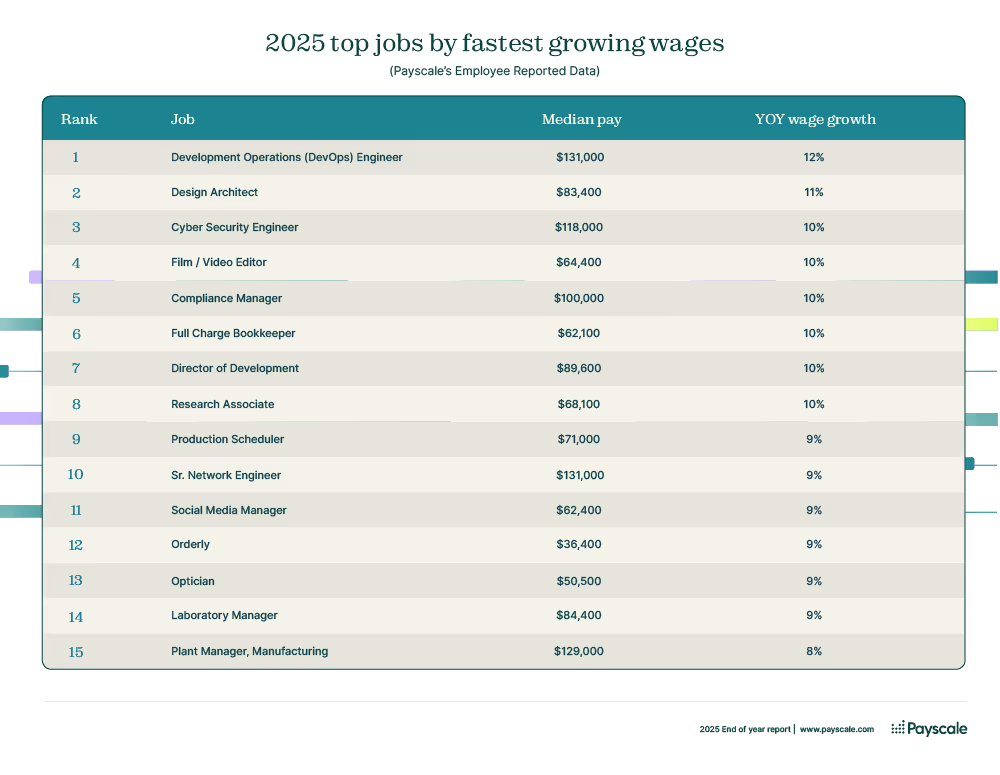
Here’s what the top roles in technology have in common: they require domain-specific knowledge and human expertise.
- DevOps Engineers troubleshoot incidents in real-time, balancing the competing demands of development velocity and system integrity. Instead of developers building software and “throwing it over the wall” to operations teams, DevOps integrate these functions: moving code from development to production. The job demands organizational knowledge with automation expertise.
- Cyber Security Engineers adapt to threats that don’t follow predictable patterns. They bring judgment by thinking like attackers and making decisions about the tradeoffs between security and usability. AI might flag anomalies, but it can’t design a security strategy or respond to a sophisticated breach. Meanwhile, AI has armed bad actors with new attack vectors (deepfakes, automated phishing), escalating the demand for cybersecurity talent.
- Senior Network Engineers manage the infrastructure that keeps everything running. When networks fail, they diagnose issues across multiple layers of technology, often under intense pressure. The job requires experience that doesn’t come from training data.
Those who maintain your IT systems’ “plumbing” enjoy higher wage growth than other technology jobs. For HR, this means some of your tech roles require pay premiums at hire and significant market adjustments. With others, you can be more conservative.
.avif)
Technology infrastructure jobs are harder to automate
Artificial intelligence has transformed certain tech jobs: generating code, testing, and writing documentation. Employers are paying salary premiums for AI skills to automate these tasks.
Yet AI struggles with technology infrastructure roles for a few reasons:
#1. Context is everything. Senior Network Engineers know how technology works in practice — not just theory. They understand your specific systems and team dynamics. Every organization’s infrastructure is a unique load of technical debt and legacy decisions.
#2. High-stakes problem solving. AI can detect potential threats, but responding to them requires human expertise. When a breach occurs, cybersecurity experts must make judgment calls: containing the damage, tracing how attackers got in, and closing vulnerabilities.
#3. The work keeps evolving. As security threats increase and deployment strategies shift, these tech jobs involve continuous learning that go beyond writing snippets of code.
#4. Accountability matters. Organizations need employees accountable for their technology infrastructure: those versed in compliance and able to explain decisions to non-technical stakeholders.
Tech industry market trends 2025
Layoffs have had an outsized impacted the Technology industry. Challenger, Gray, & Christmas’ report that Technology leads private-sector job cuts this year. Tech companies have announced 153,536 job cuts, up 17% from 130,701 last year.
But the layoff narrative misses nuance: while some workers in Tech are struggling, other roles are seeing wage growth — even if the “winners” aren’t winning by as much as previous years.
To understand what’s actually happening inside tech companies, we analyzed compensation data from Payscale Peer, which tracks real-time salary changes across industries.
We ranked Technology sector jobs by 12-month base pay growth to see which roles are gaining ground and which are losing it.
The results reveal an industry playing defense.
TOP JOBS IN TECH BY WAGE GROWTH
BOTTOM JOBS IN TECH BY WAGE GROWTH
These wages patterns might primarily reflect supply and demand in the Technology sector. However, we can speculate about what else is driving these figures.
In Technology, it’s go-to-market (GTM) and some customer-facing roles seeing higher wages. When growth slows and funding dries up, companies double down on revenue protection (Customer Success) and operationalizing sales motions (Product Marketing and Sales Engineering).
Roles focused on new software projects or R&D (Software Developer I and Systems Engineer III) become less critical.
Meanwhile, employees in positions that could be augmented by AI (Technical Writers and Developers) are seeing declining wage growth.
Tech companies are also prioritizing sales talent with technical knowledge (Sales Engineers), while base pay for transactional sales roles (Account Executives, Sales Directors) has dipped.
For HR teams, these trends create a new challenge: determining where market adjustments are critical.
HR’s growing need for industry-specific compensation data
The divergence in tech compensation makes industry-specific salary data more critical. When DevOps Engineers enjoy double-digit wage growth, while tech wages elsewhere stagnate or decline, it’s harder to make informed decisions.
Organizations need granular insights into which roles demand higher market adjustments and which don’t.
Real-time, industry-specific compensation data from Payscale’s Peer becomes imperative. Employers can’t afford to overpay for roles where the market has softened, nor can they risk losing specialized talent by lagging competitors.
Payscale compensation data tracks real-time salary movement, helping you:
- Keep pace with your peers: Track competitors in your industry with filters and specs that matter to your business.
- Discover emerging markets: See what the market is paying now with data down to the zip code.
- Price hot jobs quickly: Grab fresh salary data survey vendors don’t have with cuts reflecting real market shifts.
Companies that understand tech wage trends will retain employees with specialized skills who are expensive to replace. They’ll also realize where they can pull back.
For HR practitioners, it’s about deploying limited salary budgets where they matter most.