


Picture a benefits portal built just for you. A new parent quickly finds childcare resources. A mid-career professional accesses targeted development programs aligned with their long-term goals. AI is already transforming how people experience work, creating moments that make employees feel seen, understood, and supported. This is not a futuristic vision. It is happening now.
AI is also changing how total rewards teams operate. It helps HR move from reactive to proactive by modeling pay equity, forecasting retention risks, and surfacing insights that once took weeks to uncover. When used thoughtfully, it gives professionals space to focus on what truly matters: creating programs that are equitable, personal, and connected to people’s lives.
From employees to HR teams, AI is the conversation of the moment. PwC reports that 80% of employees using AI daily expect higher efficiency.
For total rewards professionals, this raises important questions: How can AI help employees feel truly supported? How do we balance efficiency with empathy? How do we ensure technology enhances human judgment rather than replacing it?
The promise for AI in total rewards
AI can:
- Personalize experiences for employees based on their individual situations, making benefits feel timely and relevant.
- Guide data-informed decisions across pay, benefits, and career progression with explainable, defensible rationale that helps HR teams feel confident that choices are fair and well-grounded.
- Support timely adjustments as market conditions and workforce needs shift, keeping programs aligned with both business goals and employee expectations.
- Strengthen employee wellbeing by spotting potential risks early and recommending interventions before issues escalate.
- Simplify operations by automating administrative work and recognition, giving HR professionals more time to focus on what truly matters: people.
Payscale’s 2026 Compensation Best Practices Report shows increased speed and efficiency in decision-making and reduced administrative burden are top benefits of using AI for HR and total rewards.
But the key here is fit. AI that’s purpose-built, trained on data and created with the expertise in total rewards, will serve organizations differently than a general-purpose tool. Not all AI is created equal.
The real promise of AI lies in amplifying human judgment, not replacing it. Machines reveal patterns, but humans understand context, culture, and the consequences of decisions. AI can suggest what might work. HR leaders decide what is right. When used together, AI and human insight can make total rewards programs more personal, equitable, and meaningful.
Turning AI insights into human decisions
AI can help HR teams connect the dots faster by bringing together internal data and external market benchmarks. That gives us a clearer view into things like:
- Spot pay gaps between roles, locations, or employee groups to ensure fairness.
- Predict retention risks and understand how changes to pay or benefits might affect engagement.
- Model compensation scenarios to plan budgets and merit increases effectively.
- Tailor benefits to what employees actually use and value, based on participation patterns and preferences.
AI should not replace human decision-making. It should give HR better visibility, cleaner data, and more time to focus on what matters most: thoughtful conversations, better decisions, and improving the employee experience in real life.
Risks cannot be ignored
Once data is shared, control is lost, and so is credibility.
With opportunity comes risk, especially when handling sensitive employee data. Total rewards teams manage some of the most confidential information in any organization, including pay, performance, and personal details. Misusing that data can erode trust in ways that are hard to repair.
The rule is simple: never use AI with personally identifiable employee data unless strong governance and privacy protections are in place. Especially with free, generic AI models.
The 2026 CBPR also shows the top two concerns of using AI from HR and total rewards professionals is an over-reliance on AI reducing human judgment and context as a risk and data privacy and security concerns.
Before using any AI, ask critical questions about if the tools are purpose built or generic models, the data sources used, model transparency, and storage practices. Be curious, but cautious because employee confidence is the most valuable currency we have.
A mindset for the future
Total rewards is about people. The smartest approach to AI combines curiosity with care. AI can do remarkable things, but it must never come at the cost of fairness or transparency. Used properly, it helps HR design programs that reflect the real needs and experiences of employees.
HR professionals who lead with empathy see the people behind the data. They challenge AI-driven recommendations, set limits where needed, and use judgment to keep fairness and privacy at the center.
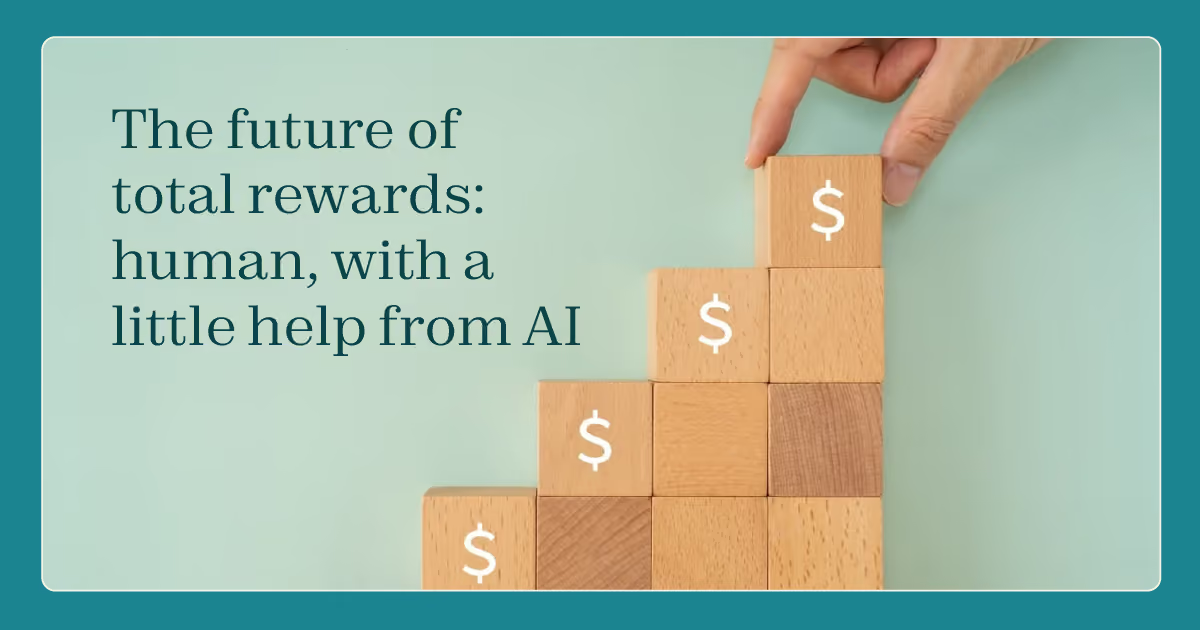
The future of total rewards is human with AI as a partner that meets your organization where it is and grows alongside your strategy. When HR teams combine curiosity, care, and insight, they can create programs that improve the employee experience and drive meaningful outcomes. AI can surface patterns and handle routine work, but it is the judgment, empathy, and expertise of total rewards professionals that turns data into programs employees respect, depend on, and feel genuinely seen by.


.avif)