You decided on a 3.5% base-pay increase in 2026. It’s right in line with the median organizations will offer employees.
Yet your employees respond with a moan. “My rent increased. This won’t even cover it.” “Have you seen the cost of groceries?”
This disconnect has a simple explanation: employees often confuse the cost of living with the cost of labor. They’re completely different concepts.
Let’s start with a definition of terms.
Cost of living and cost of labor: what’s the difference?
Cost of living is what employees spend to maintain their standard of living — housing, food, transportation, health care, and other expenses. The Bureau of Labor Statistics measures it with the Consumer Price Index (CPI).
When news outlets say, “inflation is 2.7%,” they’re talking about cost-of-living increases.
The key point for employers: cost of living is about household budgets and purchasing power. It’s what makes employees anxious when prices rise faster than paychecks.
What is the cost of labor?
Cost of labor is what organizations pay workers. Unlike the cost of living (measured by CPI), the cost of labor reflects market forces.
- What competitors pay for similar roles
- Supply and demand for specific jobs/skills
- Geographic market rates for talent
The cost of labor is about competitive positioning (how much you pay talent relative to the market), not employees’ expenses.
- Cost of living answers: “How much does an employee need to maintain their lifestyle?”
- Cost of labor answers: “What must we pay to attract and retain talent?”
While these occasionally align, they often don’t. During periods of high inflation, the gap between cost of living and cost of labor can create real challenges for HR.
This reaches a fever pitch during pay increases cycle. Employees might expect pay bumps that match (or even exceed) consumer price increases.
Employers view it differently. According to Payscale’s 2026 Pay Increases Preview Report, 45% of organizations factor inflation into base-pay increases. So, some are thinking about it.
The biggest factor though? Performance. Seventy-six percent of employers still make increase decisions on merit, which means hard choices.
A top performer receiving a larger pay increase might mean your average performers lose purchasing power. Pay-for-performance culture often forces you to choose: either reward performance or guarantee everyone’s pay keeps pace with the cost of living.
To better understand employees’ perspective, let’s look back over the past decade to see if wages have kept pace with the cost of living.
Wages and the cost of living: what the past decade reveals
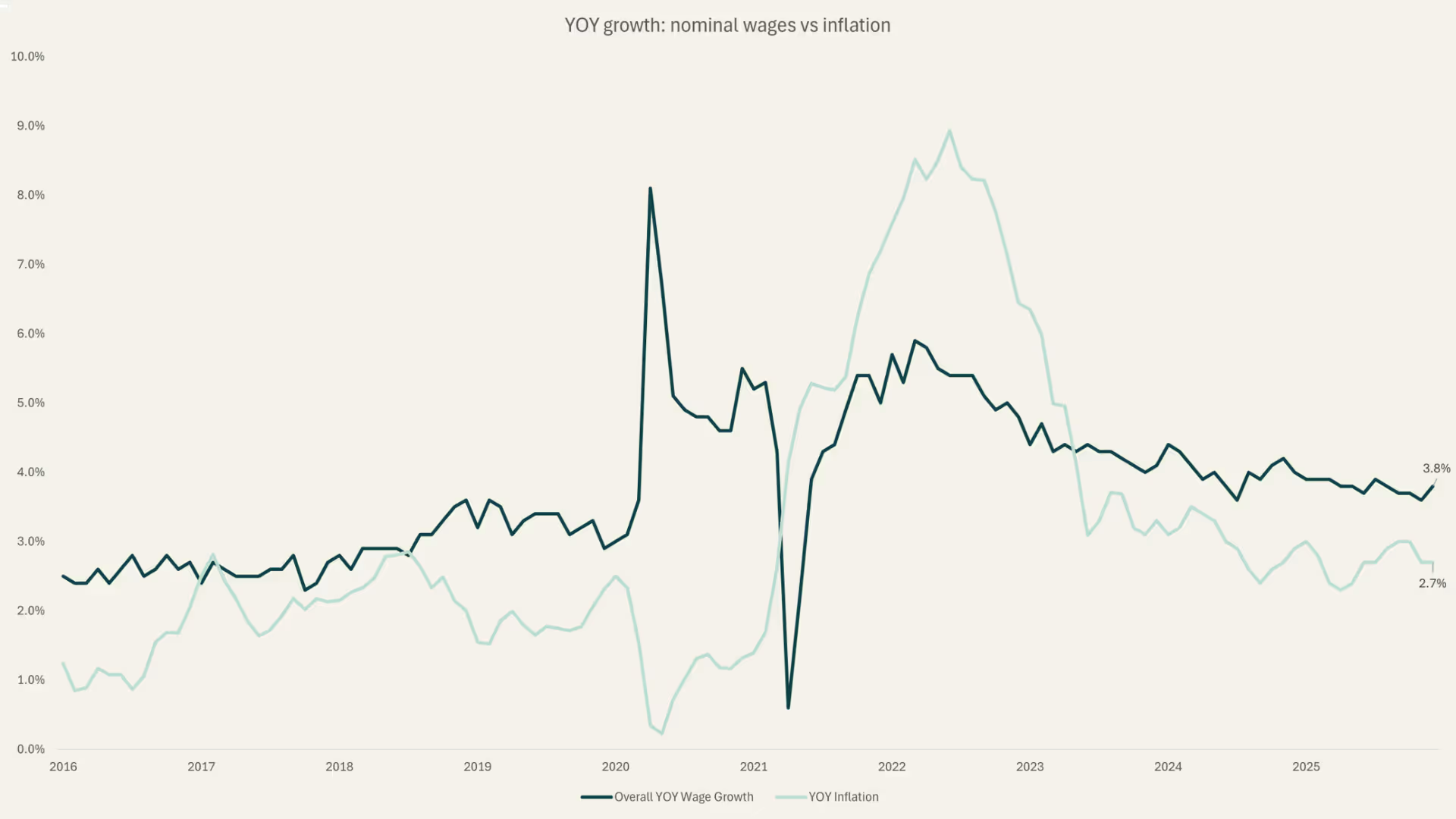
Looking at the chart below measuring nominal wage growth and inflation, we can break it into distinct periods.
2016–2019: The stable years
During this period, wage growth worked out in employees’ favor:
- Wage growth: 2.4% to 3.6% annually
- Inflation: 0.8% to 2.9% annually
- Result: Positive real wage growth
Overall, employees experienced purchasing power gains before the pandemic. While this isn’t uniformly true across all jobs and industries, most employees benefited from low inflation and sustainable pay increases.
2020 – 2021: The pandemic disruption
2020 and 2021 were a mess. Wage growth spiked to 8.1% in April 2021 before moderating to 6.7% in May, and eventually 4.6% to 5.5% by year-end.
Inflation remained low (0.2% to 1.4%) — but these swings reflected pandemic labor market disruptions and layoffs rather than across-the-board wage growth.
Then came 2021. Inflation climbed to heights not seen since the early 1980s. By December 2021, inflation grew to 7.2% with wage growth stagnating a 5%.
Factoring in the inflation, workers received a pay cut.
2022: Inflation further eats into wage gains
In 2022, inflation pulverized wage growth. The disconnect between cost of living and cost of labor peaked.
- Inflation range: 7.1% to 8.9% (highest in June)
- Wage growth: 4.8% to 5.9%
- The gap: Employees lost 2–4% in real purchasing power
Employers gave workers the highest nominal raises in 15+ years, yet they felt (and were) poorer.
2023 to 2025: Recovery and current state
Inflation cooled and ended at 2.7% in 2025. Real wage growth turned positive again.
Let’s look at the most recent numbers.
2025 and 2026: Current state of wages vs cost of living in the US:
- Wage growth: 3.6 to 3.9%
- Inflation: 2.3 to 3.0%
- 2026 planned increases: 3.5% median
- Expected inflation: ~2.7%
- Real wage growth: +0.8%
First, the good news: Employees are gaining purchasing power again. But a challenge persists: years of negative real wage growth created skepticism.
Your 3.5% planned pay increases aren’t just competing with today’s 2.7% inflation. They're also fighting the memory of when 5.5% wasn’t enough.
So why don't employers simply match inflation to avoid this perception problem? The answer once again lies in understanding what actually drives compensation decisions.
Why employers still mostly make increase decisions based on the cost of labor (not the cost of living)
Cost of living does factor into how employers make pay increase decisions — just not as much as other criteria. Payscale’s Pay Increase Preview Report reveals the three primary drivers of pay increases.
- 76% of organizations: Merit and performance
- 46% of organizations: Market adjustments for competitiveness
- 45% of organizations: Cost of living considerations
Interestingly, Canadian employers consider cost of living at much higher rate in increase decisions (60%) compared to their American counterparts (43%).
This difference reflects broader tensions about what pay increases should accomplish, and it’s driving a surprising trend in how organizations make compensation decisions.
Peanut butter pay increases?
Over 40% of organizations are considering so-called “peanut butter” pay increases. These are pay hikes spread evenly across the board like, well, peanut butter.
For employers, they’re easier to administer. No performance review theatrics. They also resolve the tension between the cost of living and the cost of labor. If you’re giving everyone the same pay increase, you can slot them slightly higher than inflation and go about your merry way.
But before HR charges headfirst into making pay increases equivalent to cost-of-living adjustments, let’s talk about the limitations and caveats of this strategy.
- Top performers may feel cheated. Think about it. You’ve been hustling hard all year to earn a big pay increase, and suddenly you’re getting the same amount as those slackers.
- Performance still matters. We don’t want to go over our skies and not evaluate performance at all. Despite its warts (it’s biased, it doesn’t account for potential, etc.), pay-for-performance is alive and well in corporate America. How you reward performance could maybe use some finesse, but you don’t want to abandon performance ratings entirely.
- Pay increases might become more complex (for different reasons). We just said peanut butter pay increases were easier to administer. That’s true. But now you must consider how you’ll reward top performers. You could give them bigger bonuses, progress them in their pay range, or even promote them — but merit-based pay increases will continue to be a best practice for years to come.
The rise of peanut butter increases may point to a pragmatic shift: organizations are separating “keeping pace with inflation” in base pay from “rewarding excellence” (bonuses, promotions, pay progression) during times of economic uncertainty.
This isn’t abandoning pay differentiation. It’s evolving how you deliver it. Done well, this approach can actually make performance rewards more meaningful and immediate, while making annual pay increases less contentious.
The key is designing a pay increase strategy where base and variable pay work in tandem to help employees keep up with the cost of living and recognizing top talent.
Final thoughts: the cost of living really isn’t your concern, but retention is
Peanut butter pay increases aside, the point of your pay cycle isn’t to solve workers’ cost-of-living problems. Pay equity matters from a legal standpoint. Retention matters from an organizational health perspective.
But it’s not your job to make everyone happy. In fact, if you confuse the cost of living with the cost of labor, you risk making really bad financial decisions.
For employees, not understanding the cost of living might mean buying a house they can’t really afford. For employers, it might mean an exodus of top talent.
Don’t ignore the cost of living entirely. HR teams remember The Great Resignation. When pay increases lag too far behind inflation, employees leave for greener pastures.
You need to hold two ideas in your head: if pay increases aren’t keeping up with inflation, your workforce is taking a pay cut. And while solving individual cost-of-living problems isn’t your responsibility, top talent retention absolutely is.
The real solution isn’t choosing between the cost of living and the cost of labor. Instead, it’s finding a solution that responds to both market realities and workforce dynamics.
This is where tools like Paycycle become essential. Compensation planning software helps you differentiate rewards sensibly: allocating base increases to stay competitive, while directing additional dollars toward top performers, retention risks, and pay equity.
You can model scenarios and make better calls: What if we give everyone 3% but allocate an additional variable bonus pool for top talent? Where are the flight risks for critical roles?
Smart compensation is about making strategic tradeoffs you can defend and communicate transparently to your workforce.
When you understand the difference between cost of living and cost of labor, you stop trying to solve the wrong problem and begin building pay increase strategies that keep your talent franchise intact.