



The state of the labor market matters as HR plans for performance reviews and pay increases.
Unfortunately, economists predict 2026 will bring “stagflation lite” — an economy with slow GDP growth, persistently high inflation, and increasing unemployment. Despite low unemployment and stable inflation, weak hiring suggests an economy headed in the wrong direction.
We’re not in a full-blown stagflation crisis like the 1970s when inflation rose to over 12% and unemployment crested above 10%, but there’s enough labor market turmoil to be concerned.
Let’s start with the data supporting this prediction.
Stagflation lite: the evidence and economic signals
The labor market added 119,000 jobs in September 2025, but has shown little change from April, according to the Bureau of Labor Statistics.
Unemployment ticked up to 4.4% with 7.6 million jobless workers. Last September, the unemployment rate was 4.1% with 6.9 million jobless. This points to a worsening economy.
But other indicators suggest the opposite. Inflation is 3%, and the Consumer Price Index (CPI) rose 0.3% in September with no signs of slowing.
Meanwhile, Americans spent $23.6 billion online over Thanksgiving weekend — up 4.5% from last year despite widespread economic anxiety. Holiday spending has exceeded analysts’ expectations.
There’s yet another twist: while labor demand is narrowing, labor supply is also contracting. Labor force participation rates fell to 62.1% in November 2025, a 0.3% drop from August, continuing the decades-long trend of a diminishing labor supply.
There are nearly 3 million fewer workers available since 2024. This supply crunch is keeping the labor market tighter, while also driving persistent wage pressure, particularly for occupations where skilled talent is scarce.
HR must avoid the trap of assuming tight labor markets means conservative salary budgets, especially for highly competitive or fast-growing jobs.
Rethinking how you reward
Employers are planning for slightly smaller pay increases next year, according to Payscale’s Salary Budget Survey, down from 3.6% in 2025 to 3.5% in 2026.
But industry-specific wage growth matters more than the average. For example, according to Payscale’s Pay Trends Report, wages in the Oil, Gas, and Consumable Fuels sector grew by 8%, while planned increases for Energy & Utilities are only 3.7%.
.avif)
Applying a flat 3.5% pay increase for workers in the energy sector risks shortchanging employees who could earn more at another company.
Organizations in high wage-growth sectors risk losing top performers by being too conservative with pay increases, while those in slower-growing industries may overspend.
In a volatile economy with high inflation, a peanut butter approach to pay increases may actually serve SOME organizations better than merit-based increases. This is particularly true in large enterprises with many low-wage earners.
When purchasing power erodes, these employees need the most relief. Cost-of-living adjustments address the universal pain of inflation, while simplifying budget planning.
Of course, rewarding individual performance remains a compensation best practice. But performance rewards take many forms beyond base pay increases, including variable pay, promotions, and progression along the pay band through skills attainment.
Tying annual pay increases to just performance ratings faces mounting criticism.
Performance reviews are riddled with bias, and employers often struggle to meaningfully differentiate pay with limited increase budgets. HR managers also spend a lot of time on fractions of percentage points that have a very low impact on employee take-home pay.
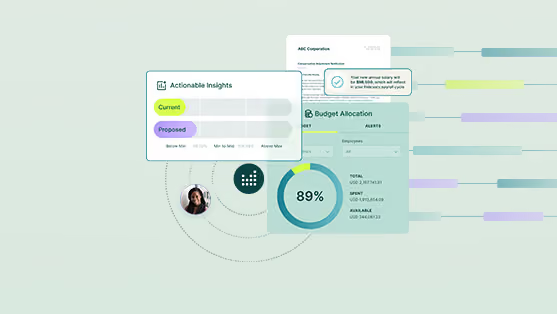
Modern compensation technology simplifies this complexity, analyzing multiple factors at once to make recommendations that prioritize external and internal equity.
Leading with transparency
Pay transparency isn’t just a legal requirement — it’s your engagement strategy.
When employees can’t easily find new jobs and watch their purchasing power erode, compensation becomes your primary lever for engagement. However, nearly half of employees (48%) have seen an uptick in workers leaving over “salary-related conflicts,” according to Payscale’s Pay Confidence Gap Report.
Without clear communication about how pay is determined, organizations risk losing trust and morale. Eventually this will result in regrettable turnover, even if employees are job hugging.
Thoughtful communication about compensation decisions and advancement is what engages and retains top talent.
Here are four questions employees are asking about their pay:
#1. What’s my total compensation? Total compensation includes both base salary and variable pay (e.g. bonuses). The full picture matters.
#2. How was my pay determined? Employees want to know where they land on their pay range and why that decision is fair. Explaining compensable factors like education, experience, skills, and location builds trust.
#3. How does my pay compare? You should also provide a compensation statement that includes either pay or compa-ratio (or both) so employees understand the market value of their jobs.
#4. How can I progress my pay? Employees want to grow and earn more as they do. Do you have a practice for moving employees up the pay range as well as job levels for internal advancement?
Answering these questions builds employee confidence in how their roles are valued. Equally important is providing a comprehensive view of total rewards, demonstrating that your investment extends beyond salary to their overall well-being
Focusing on total rewards
Your total rewards package is a critical tool for talent retention and overall workforce engagement, especially when salary budgets are constrained by economic conditions.
Yet many employees don’t realize the full value of their total rewards package and overlook benefits.
Total Rewards Statements (TRS) can solve this problem by providing employees with a comprehensive outline of their base salary, bonuses, long-term incentives, stipends, and other monetary benefits.
Arm yourself with modern tools to manage any market
Stagflation poses a particular challenge for compensation professionals. The last bout of stagflation ended in the early 1980s when Fed Chairman Paul Volker aggressively raised interest rates, pushing unemployment into the double digits. But today’s Fed seems less inclined to manage inflation than prevent a recession.
The situation presents HR leaders with a daunting responsibility: managing pay increases without eroding profit margins.
Be too generous with pay raises, and you risk unsustainable labor costs that can be difficult or impossible to throttle back. Be too conservative with pay raises and you risk losing talent.
Stop guessing at the right pay increases. In a stagflation lite economy, compensation decisions require precision. Paycycle analyzes multiple factors (market competitiveness, internal equity, performance, retention risk, etc.) to help you invest wisely without overextending budgets or losing talent.