



For HR leaders and compensation professionals, the stakes for 2027 salary planning are high. U.S. employers are planning 3.5% salary increases for the coming year — a tick up from the 3.4% they gave in 2026. But inflation is rising too, which means everything is more expensive. CFOs are asking tough questions about how salary budgets drive business value.
Payscale's newly released 2026–2027 Salary Budget Survey (SBS) reveals a critical shift. The percentage of U.S. organizations expecting higher salary increase budgets has jumped to 30% — nearly double last year's 16%. This surge signals greater confidence, but it also signals a challenge: how do you justify these increases to finance leadership when both pay and inflation are climbing?
The answer lies in data, strategy, and your ability to model scenarios and demonstrate ROI.
Why salary increases are rising in 2027
For the past few years, salary increases have trended downward. After the post-COVID spike in wage growth during the Great Resignation, most organizations pulled back on pay increases as hiring competition eased and the labor market cooled. 2027 marks a turning point.
Salary increases are rising again. The data shows that 30% of U.S. organizations plan to increase their salary budgets for 2027, compared to just 16% last year. Sixty-three percent plan to keep budgets flat, while only 8% expect to lower them. In Canada, the picture is similar: employers plan 3.5% increases for 2027, on par with the United States — an unusual alignment that reflects improving economic conditions and more emphasis on rewarding performance.
When asked why they're increasing salary budgets, the primary reason cited by organizations this year is improved economic conditions (30%). Competition for talent, retention concerns, and the need for competitive positioning were also answer choices.
But rising pay increases don't happen in a vacuum. They're occurring against the backdrop of rising inflation — and that's where aligning budget with finance gets dicey.
Strategic pay planning when wage growth matches inflation
Inflation and wage growth are now roughly equal right now — 3.5% in the United States as of June 2026. For employees, this means their purchasing power is losing value. Any spike in inflation without corresponding pay increases feels like a pay cut. For employers, that means the risk of attrition may mount.
However, this is different from the Great Resignation era when inflation outpaced wage growth and employees were highly motivated to job hunt in search of higher pay. Back then, opportunities were abundant and the equation was simple: give larger raises or lose talent. Today, with wage growth matching inflation and job opening stymied, employees are facing less financial pressure, but they are at high risk of disengagement.
The Salary Budget Survey Report underscores this delicate balance. In 2026, 25% of organizations said they were losing talent due to insufficient pay increases. That number could shift as economic conditions change. Organizations that don't stay attuned to macroeconomic pressures and adjust their compensation accordingly risk a disengagement or retention crisis.
For CFOs, this matters because it translates to financial risk. Higher turnover means higher recruiting and training costs, lost productivity, and institutional knowledge walking out the door. Disengagement means performance wanes as employees “quiet quit” due to a lack of rewards for effort.
However, when you frame salary increases as an investment in retention and operational stability rather than an expense — and justify it with hard data — the conversation changes.
Justifying your salary budget to the CFO
The CFO's job is to protect the bottom line by asking hard questions about the necessity of spend. Approach your salary budget proposal the way they think: as an investment with measurable returns.
Start with the macroeconomic context. Show the data that inflation is rising, wage growth is matching inflation, and 30% of peer organizations are increasing their salary budgets with average pay increases on 3.5%. This is the market reality. Your CFO understands benchmarking.
Next, translate salary investment into business outcomes. Research consistently shows that retention driven by competitive pay reduces costs. Calculate the cost of replacing a mid-level employee (typically 50–200% of annual salary depending on role level). Now estimate how many employees you'd retain by investing in a modest salary increase. The math usually favors giving pay increases.
Third, segment your proposal by strategic priority. Not every team deserves the same increase. Show how you'll allocate your salary budget to high-retention-risk roles, competitive talent markets, and strategic growth areas.
Finally, show flexibility. Build contingency into your plan. Some organizations set aside a reserve to pivot on salary strategy if inflation spikes or economic conditions shift unexpectedly. This demonstrates financial prudence while protecting your ability to compete for talent.
Three strategies for data-driven compensation planning
Here's how leading organizations are approaching compensation planning in 2027:
1. Build your business case with market data
Use your industry-specific salary budget data to show where you stand relative to peers. The 2026–2027 Salary Budget Survey breaks down salary increases by industry, company size, revenue, location, and more by each employee type.
There are corroborating salary budget surveys from Gallagher, Willis Towers Watson, Mercer, and WorldatWork you can reference. Show the CFO not just your proposed salary budget for pay increases but the market benchmark and context that justifies it.
2. Recommend pay increases by strategic need
Merit-based increases reward performance; cost-of-living adjustments keep pace with inflation; market adjustments target competitive talent gaps; promotional increases retain top performers. Payscale’s Salary Budget Survey shows that merit increases remain the most popular strategy, but some organizations combine multiple approaches.
With a tiered approach, you might standardize 2% across-the-board “peanut butter” pay increases regardless of performance, plus an additional 2% merit pool for top performers, plus targeted market adjustments in departments or job families where retention is an issue or compa-ratio lags market averages. This shows discipline and ROI thinking. Many organizations use a merit matrix to facilitate recommended pay increases based on performance ratings with some discretion for managers to recommend adjustments.
3. Monitor and adjust pay throughout the year
The salary budget planning cycle is not a one-time event. Economic conditions, inflation, and competition can shift. If attrition in a key department jumps above forecast, you may need a retention reserve. This is not reactive; it's adaptive planning based on data and targeted strategic outcomes.
How Paycycle helps you execute on strategic compensation planning
Planning your salary budget is one challenge. Executing it with precision is another.
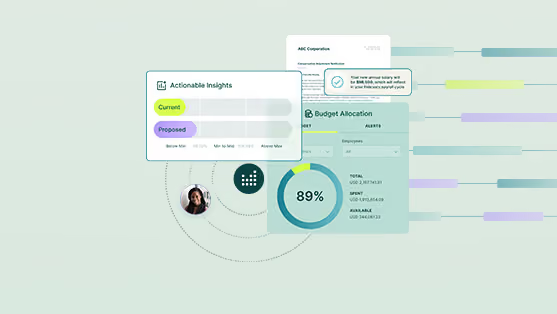
This is where Paycycle — Payscale's compensation planning software and part of the Payscale Intelligence Cloud — changes the game. Paycycle enables organizations to transparently and effectively manage the full salary increase cycle in collaboration with managers.
Here’s how:
Centralized salary planning decisions. Paycycle allows compensation teams to recommend pay increases and managers to request pay increase adjustments for specific employees within predetermined budgets — all in one place. This eliminates the chaos of spreadsheets flying between HR, finance, and department heads. Everyone's working from the same data, which means fewer errors and faster cycles.
More efficient pay increase cycles. Instead of months of back-and-forth, Paycycle compresses the salary planning and execution timeline. Faster cycles mean you can be more responsive to market changes and get raises in place proactively, which is a real competitive advantage.
Collaboration with managers. Paycycle provides managers with always-on intelligence about employee pay — not just during formal review cycles. This means managers can make informed, defensible salary decisions in real time as they manage their teams. They can see how a proposed pay increase compares to external market rates and affects internal equity against the employee's performance record. This transparency builds confidence.
Pay equity guardrails. Paycycle includes Insights, a feature that gives HR teams point-in-time visibility into pay data during review cycles. This means you can flag potential pay equity issues before they become problems and ensure consistent application of your salary increase strategy across the organization.
An audit trail for compliance. Every salary decision is tracked with rationale. When regulators ask about pay equity, or CFOs want to understand why certain increases were made, you have documentation. This is particularly valuable in industries with heightened compliance scrutiny.
Looking ahead at compensation trends
The 2027 salary budget season will test organizations' ability to balance growth with discipline. Economic conditions have improved, but the future remains uncertain. Inflation could spike. A recession could loom. Competition for talent could intensify. The organizations that win will be those that combine solid market data with flexible, data-driven execution that can pivot with the market.
Right now, pay increases and inflation are both rising, and that changes the conversation you need to have with your CFO. This is not about convincing finance to be generous. It's about showing that competitive salary increases are a strategic investment in retention, stability, and growth.
Use the 2026–2027 Salary Budget Survey data to ground your proposal in market reality. Use compensation management software like Paycycle to execute with transparency. When you combine data-driven planning with precise execution, you transform salary budgeting from a compliance obligation into a competitive advantage.
Ready to plan your 2027 budget with confidence?
Download Payscale's 2026–2027 Salary Budget Survey for detailed breakdowns by industry, company size, and employee type. Or schedule a demo of Paycycle to see how compensation planning software can help transform your pay decision processes into best practices.