


Why hiring delays are really an alignment problem, not an issue with speed
Hiring has never moved faster. So why do so many offers keep stalling?
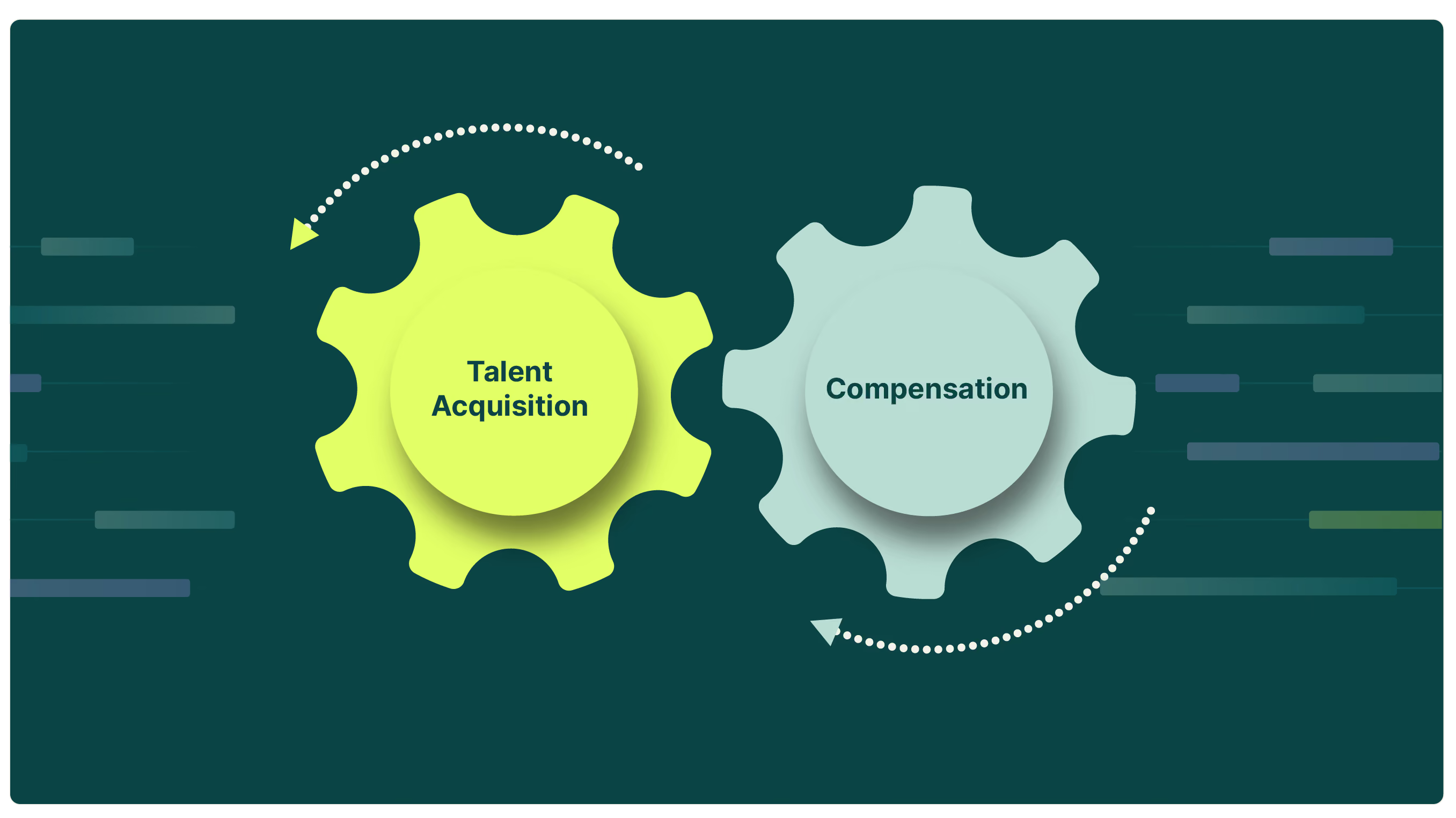
Many organizations point to speed: too many approvals, too much back-and-forth, not enough automation. But talk to the people running the process, and a different picture emerges. The bottleneck isn't speed. It's alignment between talent acquisition (TA) and compensation.
So when a role does open—and Payscale's 2026 Compensation Best Practices Report shows that 43% of organizations actively hired last year with turnover at just 8%, most of those are planned—why does alignment still fail? Because TA starts recruiting before compensation has locked in the level, range, and room for negotiation. Those decisions don't disappear—they get pushed later, when a candidate is already waiting.
What looks like a slow approval process may actually be an alignment problem that surfaced too late.
Picture this:
TA is hiring a senior product manager. Recruiting starts before the role has been fully leveled or priced. A strong candidate emerges expecting $190,000, but compensation later determines the approved range tops out at $180,000. Now TA is waiting on compensation, compensation is assessing internal equity, finance is reviewing the budget, and the candidate is waiting on everyone.
In an aligned process, those decisions happen before the job is posted. TA, compensation, and the hiring manager agree on the level, range, and room for flexibility upfront. When the right candidate comes along, the offer doesn’t trigger a new round of internal decision-making. Everyone already knows the guardrails.
The real cost of misalignment
When an offer misses expectations or raises an internal equity question, the risk isn’t just losing a candidate. It’s a whole thing: the organization may have to revisit the role, reconsider the range, pull compensation back into the conversation, or restart the hiring cycle altogether.
Pay transparency is raising the stakes, too. Candidates walk into interviews with more salary information than ever, but that information doesn’t always match what an organization can actually offer. In fact, 51% of organizations cite balancing candidate expectations with budget as their top hiring challenge.
The problem isn’t simply that candidates and organizations disagree on pay. It’s that too many organizations are figuring out what they can offer after the hiring process is already underway.
Four foundations that close the gap
The organizations getting ahead of this aren’t just trying to hire faster. They hire differently — with more consistency and real alignment, removing the factors that slow hiring down in the first place. That starts with four things TA and compensation share:
- A shared job architecture. One source of truth for roles, families, and levels that both teams work from, instead of TA and comp maintaining separate, slightly different definitions.
- Consistent leveling. What “senior” means is documented and agreed on before sourcing starts, and it holds across every business unit.
- Compensation guardrails. Pay bands are defined and communicated up front, so most offers don’t require a one-off decision.
- Clear ownership. Everyone knows what TA owns, what compensation owns, and when a role should move between them.

That last piece is the sneaky one. It’s usually no big deal — just a hiring manager who loses someone and pings TA, skipping compensation or finance. Everything seems fine until, weeks later, everyone realizes they were never on the same page about the role in the first place.
Where the breakdown happens
The friction is two-sided. Sometimes TA acts too fast, pitching a role to a candidate before leveling is nailed down, which pressures comp to stretch a pay band that was never meant to flex. Other times, compensation treats every band as set in stone, leaving TA and hiring managers no room to make reasonable trade-offs within an agreed range.
This is what’s happening: TA and comp are working off different playbooks, at different times, with no shared rules about flexibility or authority. That's the breakdown. The blame game is another waste of time — the root issue is a lack of alignment.
If your job architecture hasn't been revisited in two years (yikes), everything downstream is broken. Skills that used to be nice-to-haves are becoming requirements in real time, and a stale architecture means job postings, leveling, and pay ranges are all working off outdated assumptions. The result is inconsistent listings, wider-than-necessary salary ranges that confuse candidates, and comp teams spending time fighting fires instead of setting direction.
What to fix first
So where do you actually start? Here are a few practical moves we see working again and again:
- Keep one accessible, searchable job repository instead of scattered documents, so nobody is rewriting a role that already exists.
- Revisit job architecture regularly, not as a one-time project, and check that leveling is enforced consistently across teams.
- Benchmark skills and pay against current local market data before a role is approved for hiring, not after. (Payscale Ascent handles this kind of continuous market benchmarking).
- Treat pay transparency compliance as ongoing, since requirements continue to expand and fines for non-compliant postings can be significant.
Payscale’s JobNav Recruiter plugs compensation intelligence right into the recruiter’s workflow, keeping job postings anchored to approved pay ranges and job architecture from the start. That helps close the gap between what comp teams design and what candidates see.
But let’s be clear: the real fix isn’t just a shiny new tool. TA and compensation must agree on the framework before any role goes live.
Let’s boil this down
Compensation intelligence (not headcount or budget) separates organizations that hire well from those that struggle. Sixty-eight percent of organizations where leadership treats compensation as a strategic lever report better HR outcomes overall. Getting there doesn’t require a bigger team. It requires TA and compensation to work from the same job architecture, leveling, and guardrails, so when an offer goes out, everyone already agrees it’s the right one.
And while JobNav Recruiter is one critical piece of that alignment, it’s not the whole picture. JobNav runs on the Payscale Intelligence Cloud — a connected ecosystem built on a shared data foundation, a modular suite that scales with your compensation program, and contextual intelligence that puts the right insight in front of TA, comp, and leadership at the moment they need it, so hiring decisions and comp strategy finally speak the same language.
Want the full framework, plus the data behind it?
Watch this webinar — How to prevent offer and pay alignment issues that create hiring delays — and download the quick guide for a closer look at where alignment breaks down and how to fix it.