

The data behind every confident pay decision just got a lot stronger
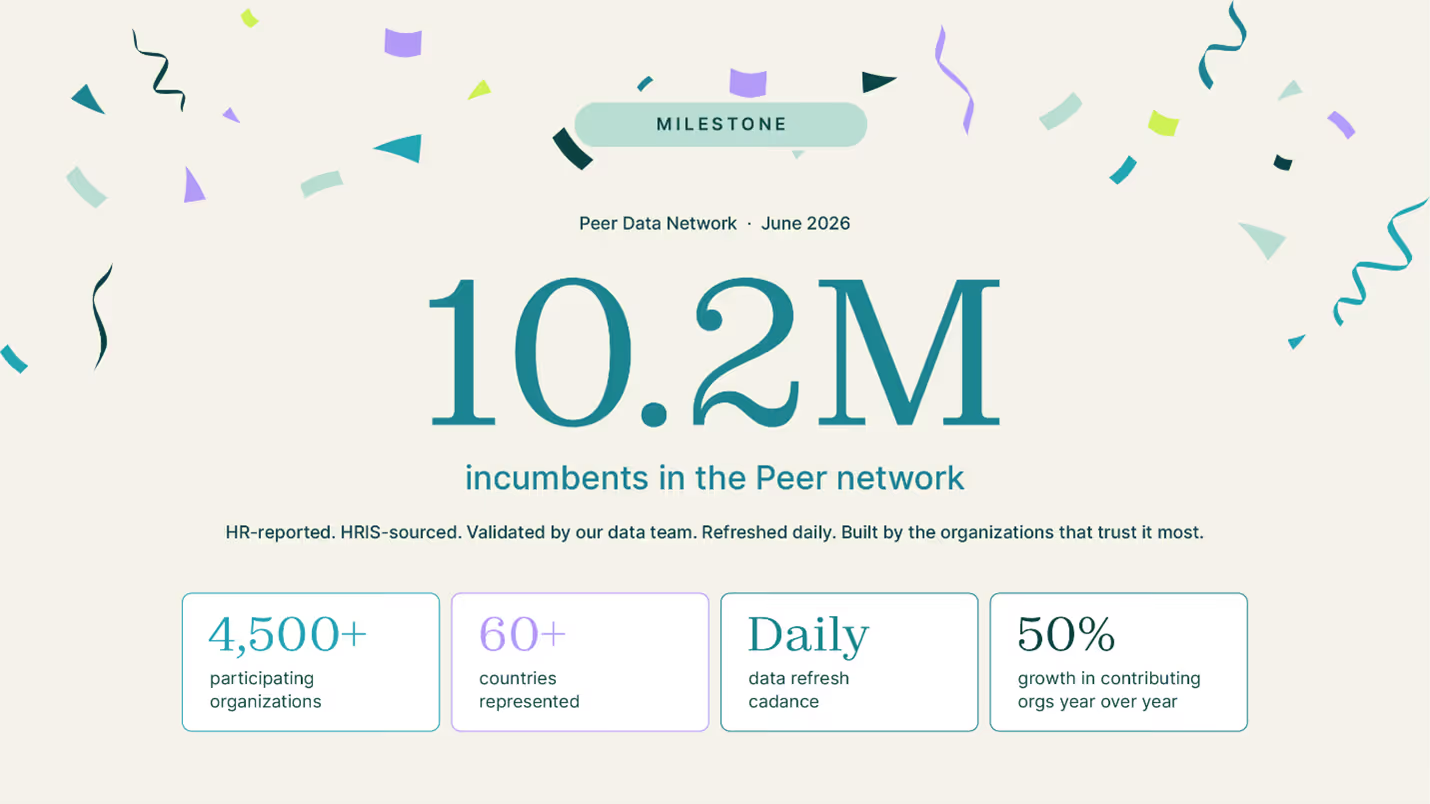
The Payscale Peer network just crossed 10.2 million incumbents. These are real compensation records sourced directly from the Human Resource Information Systems (HRIS) of more than 4,500 participating organizations across 60 countries, securely processed by our expert data team.
That number matters. Not as a product milestone, but as a signal about what compensation teams now have access to.
Salary data has always lagged the market
I have spent 18 years building enterprise technology. One thing stays constant across every platform and industry: when people make decisions without data they trust, they either freeze or they guess. In compensation, both outcomes are costly for the organization and for the people whose pay depends on those decisions.
For most of its history, compensation data worked like a snapshot. Organizations filled out a survey once a year, submitted it to a vendor, waited months for results, then spent the next 12 months making pay decisions against a picture of the market that was already out of date.
Now, the gap between when the market moves and when your data catches up is where comp teams increasingly lose. Your offers get declined. Your retention conversations happen too late. Or leadership asks youa direct question about competitiveness, and the honest answer is: you do not actually know right now.
What 10.2 million incumbents represents
Rather than annual survey forms, Peer data flows directly from organizations' HRIS and is then structured, validated, and matched by a team of Payscale data experts. Systems and careful guardrails keep this data secure and appropriately aggregated and aged in line with industry best practices.
As the network grew, the data got stronger. Coverage improved for the roles hardest to benchmark. Comp professionals walked into leadership meetings with numbers they could more confidently stand behind.
Networks that earn trust compound it. At 10.2 million incumbents, that compounding is showing up in ways that change what comp professionals do every day.
What it means for comp teams using Peer today
Peer does not remove uncertainty. It changes the starting point.
Peer data is refreshed daily and draws from a large, aggregated base of incumbent records. Comp teams start with a better view of how employers are pricing work across roles and regions. They can better compare adjacent jobs and set ranges with stronger context.
Each decision still sits with the comp team. But the difference lies in the inputs and workflows built around better data to help inform the decision.
From there, the comp team's work does not stop as they then apply differentials, align to job levels, and ensure consistency across decisions.
But Verse helps comp teams more efficiently perform that work.
It applies geography and skill adjustments, aligns benchmarks to the organization’s leveling structure, and removes variation from manual calculations.
At scale, inconsistency creates risk, and pay decisions become hard to explain. Gaps can show up across teams and regions.
But when analysis is supported by data-informed, intelligent workflows, comp decisions scale more easily. More roles get priced with the same logic. Managers and finance partners work from the same baseline. Decisions move faster with fewer revisions.
Data confidence drives every step.
The Payscale Peer network is still growing
Surpassing 10.2 million incumbents in Peer is not the finish line. We are adding compensation elements like equity, long-term incentives, bonus pay, and allowances. Organizations relying on our data for director-level and above roles need those components to form a more complete picture of compensation.
Some vertical networks are newer, and international markets still do not yet have the depth we have built in the U.S. But we are building toward both.
Our north star is trust. This network has grown because the value is real, and because the organizations in it chose to participate in something larger than their own benchmarking problem.
To every organization in this network
The success of Peer comes from every organization and comp team that has connected an HRIS feed, submitted a data file, or matched a job. Each contribution makes the Peer network stronger for everyone.
Peer is data infrastructure that produces real confidence. Not scraped, not self-reported, not aggregated from sources that disagree with each other. Reported by HR professionals, validated at the source, and more regularly refreshed so that comp teams can make complex decisions supported by data they trust.
That is what we are building. At 10.2 million incumbents, we are just getting started.