


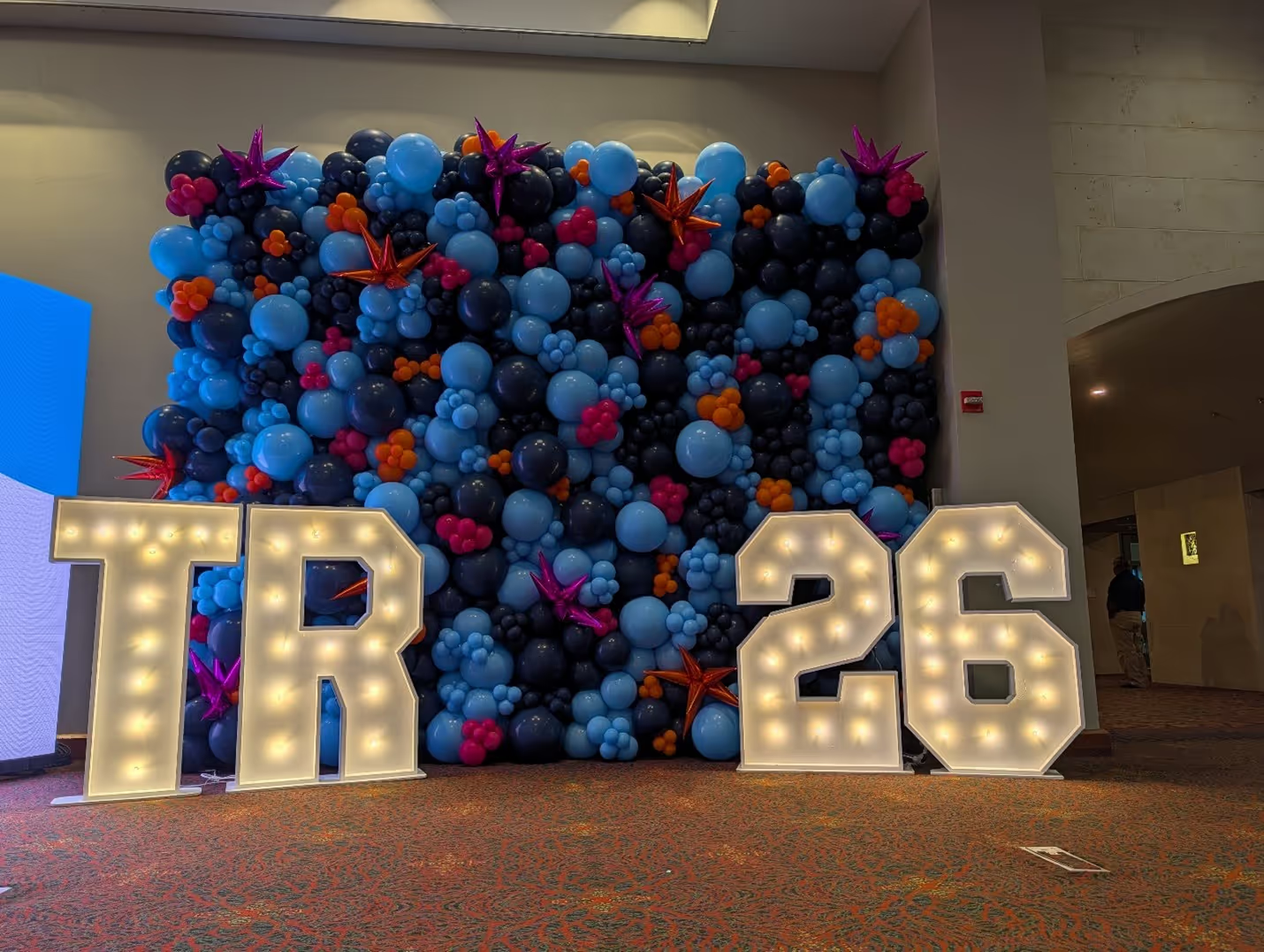
This week, more than 1,400 compensation and total rewards professionals were welcomed to WorldatWork Total Rewards '26 in San Antonio. Payscale participated as a sponsor and presenter for multiple sessions. What we heard — from the stage, as attendees, and from our booth conversations — reinforced the central theme: the way organizations have been managing compensation is no longer enough.
Pay transparency legislation is accelerating, AI is reshaping how compensation decisions get made, and total rewards strategy now lives across HR, finance, talent acquisition, and people managers — whether those teams are ready for it or not.
Here's what matters for every organization trying to win the talent game in 2026.
Total rewards is no longer a functional silo
One of the most consistent signals from TR'26 was that the traditional model of compensation — managed in isolation with decisions handed down to managers and employees — needs reform.
WorldatWork and HRCI used the conference to launch a formal collaboration, the HR@TR program, designed to bring HR and total rewards professionals into a shared learning and credentialing ecosystem. The expansion into additional certifications signals something bigger than a partnership announcement: the professional identity of a comp or TR professional is formally widening.
WorldatWork CEO Scott Cawood put it plainly: the goal is to help HR and TR professionals position themselves as a business investment, not an overhead cost. That means understanding how finance thinks about budget, how talent acquisition thinks about offer competitiveness, how people managers think about retention — and how all of those conversations are really the same conversation told from different vantage points.
HRCI CEO Amy Dufrane reinforced the urgency: with four generations in the workforce and AI reshaping every corner of the employee experience, HR and TR professionals are in the middle of the most compressed period of change the profession has ever seen.
"If we handle this time of transition well, HR will continue to be strategically indispensable."
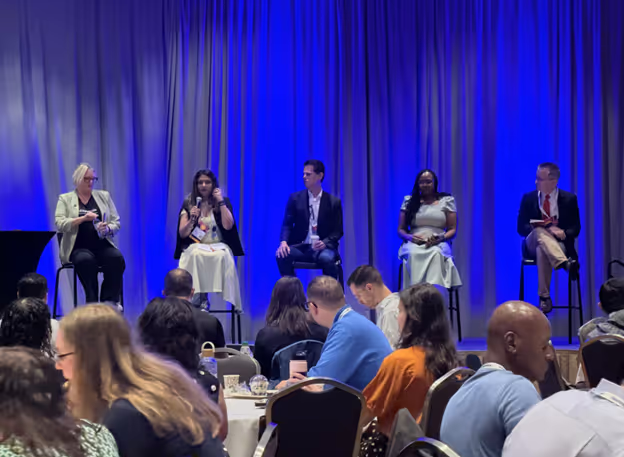
Payscale offered further illumination on this concept during a sponsored breakfast titled “From Siloes to Strategy: Connecting Compensation Across the Business,” which was moderated by Ruth Thomas, Payscale’s Chief Compensation Strategist and host of Comp & Coffee with Payscale's CFO Philip Watson and three compensation practitioner panelists each representing a different stakeholder perspective on pay.
The takeaway? Companies showing up as talent competitors aren't the ones with the biggest budgets. They're the ones where HR, comp, finance, talent acquisition, and people managers are working from a shared strategy — and shared data.
AI is no longer emerging — it's expected
If there was a single word that defined TR'26, it was AI. Nearly every session touched on it in some capacity, and the conversation has matured well past the "should we use it?" phase.
What TR'26 surfaced is that organizations exist on a spectrum. Some are in cautious adoption mode, using AI for targeted tasks like job matching, benchmarking analysis, or merit cycle guidance. Others are moving toward fully agentic AI embedded directly into their systems of work. The nuance that emerged from practitioner conversations was important: HR tech providers are scaling their AI capabilities to meet companies wherever they are, from light guidance to deep automation.
The more interesting shift, though, is what AI is making possible beyond efficiency. As the conversation moves from analytics to the broader total rewards story, AI-powered tools are creating new opportunities to manage how employees perceive and experience pay, not just how it's administered. That's a meaningful evolution.
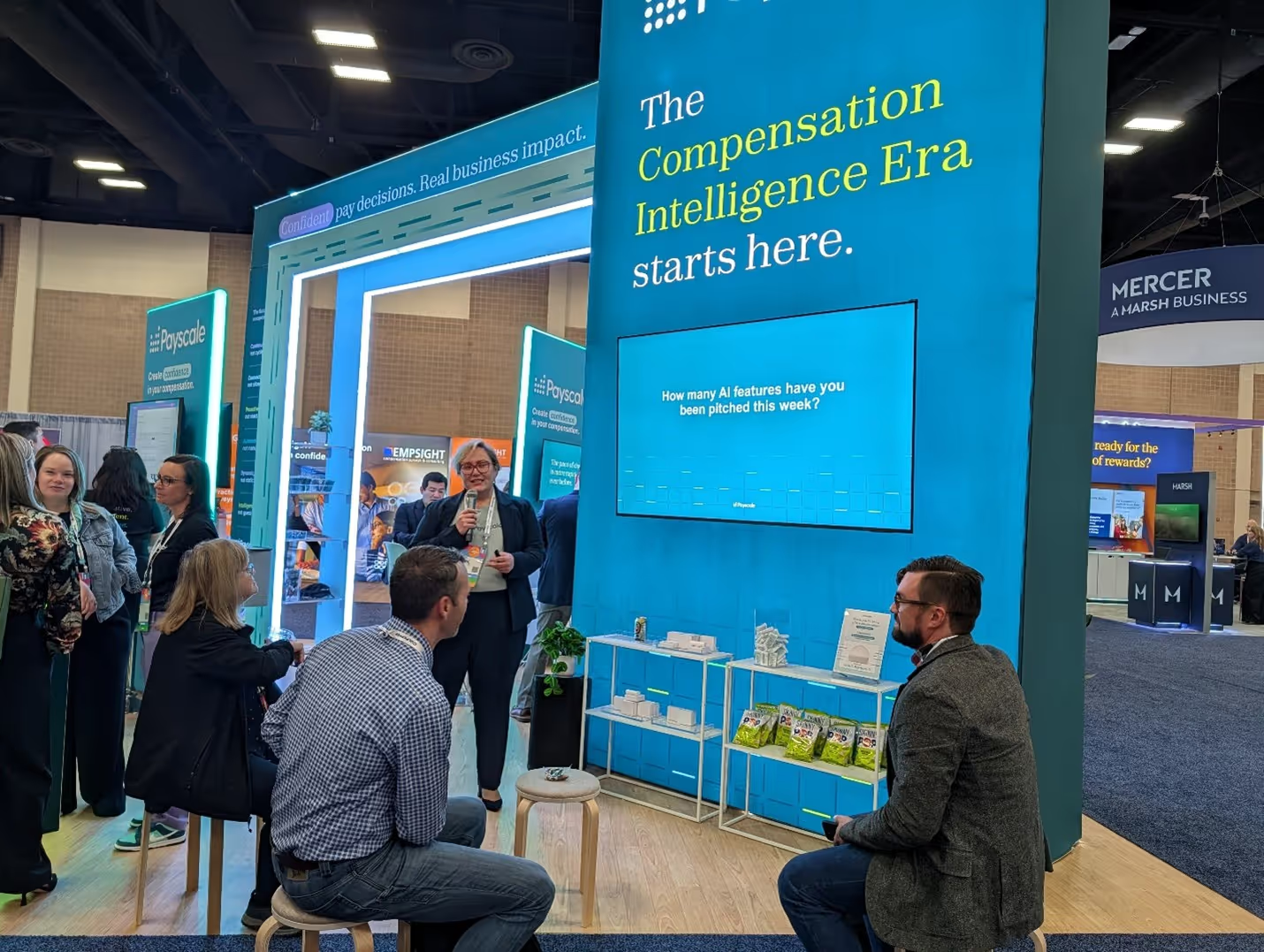
In the expo hall, Payscale drew interest from practitioners on this very topic. The Payscale Intelligence Cloud answers what a data-forward approach to compensation looks like in practice when guardrails on AI are used to enhance human judgement rather than replace it, unlocking returns on compensation strategy that traditional tools simply can't.
Pay transparency is accelerating
Pay equity and pay transparency dominated a significant portion of the agenda, but the tone has shifted from previous years. These are no longer compliance checkboxes; they're strategic priorities.
According to Payscale’s Compensation Best Practices Report, pay transparency is on the rise and 60% of organizations say that pay equity analysis is a current or planned initiative in 2026, an increase from previous years after a slight dip between 2023 and 2025.
Sessions covering the EU Pay Transparency Directive countdown, the evolving SEC disclosure landscape, and domestic pay equity and pay transparency legislation signaled that the regulatory environment is tightening globally. Organizations that treat transparency as a legal obligation to be minimized are increasingly exposed — both to compliance risk and to the talent market.
Candidates and employees are more informed about pay than ever before. They aren't just looking at pay stubs. They're on LinkedIn, Glassdoor, job boards, and using search and LLMs for salary analysis. They know what the market looks like. The organizations building trust aren't necessarily paying the most — they're the ones making compensation feel like a human, transparent conversation rather than a black box.
The organizations doing this well are treating pay transparency not as a disclosure requirement but as a relationship-building tool to demonstrate that pay decisions are principled, data-driven, and fair.
Pay for performance
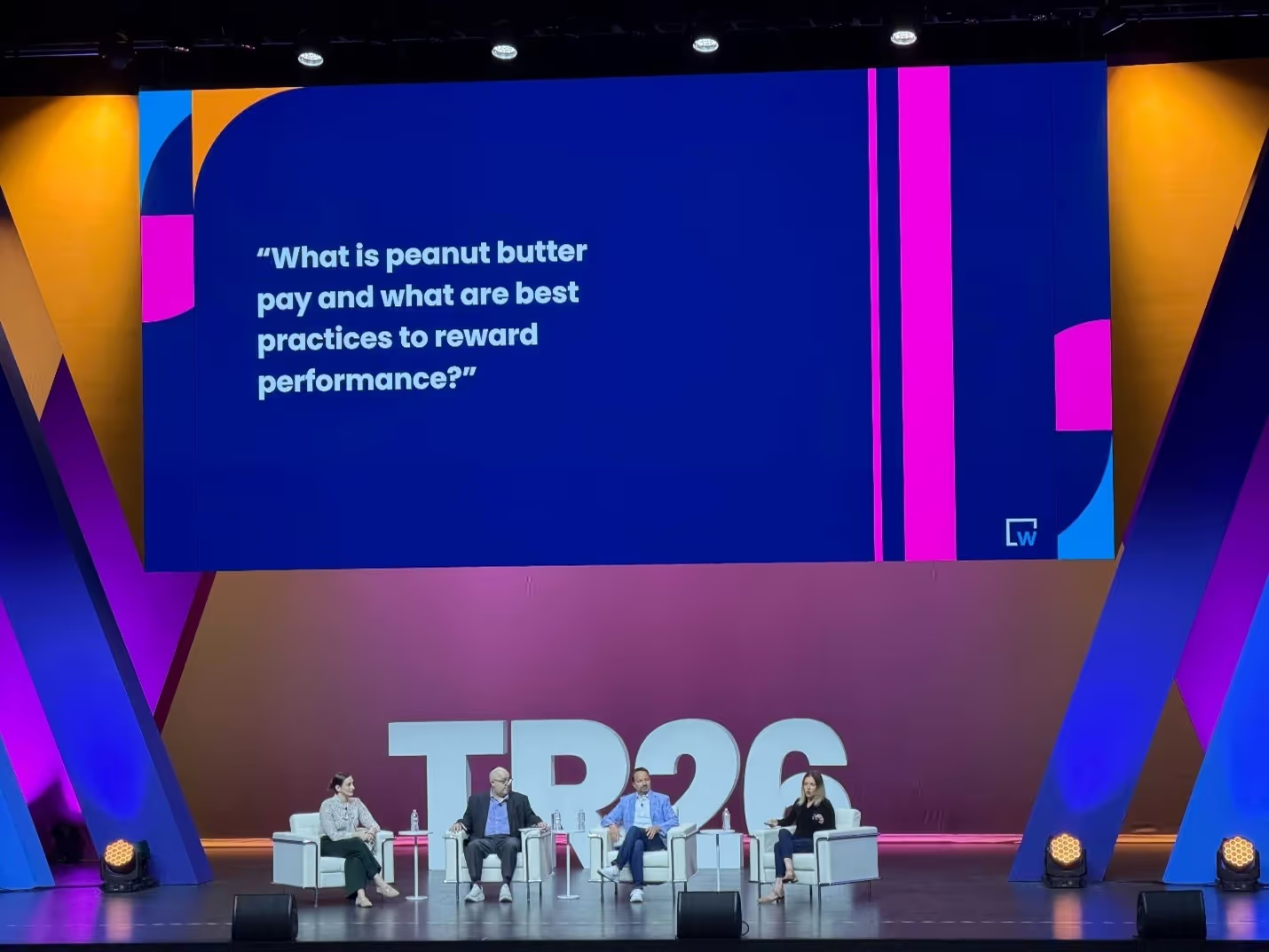
One of the liveliest discussions at TR'26 centered on pay for performance, surfacing a tension that every comp professional knows but rarely names.
Some sessions argued that extra compensation for high performers doesn't reliably drive higher output. Throwing money at a top performer who is already disengaged or heading out the door rarely saves them. A merit increase is a band-aid, not a retention strategy, if the underlying relationship has already broken down.
This argument deserves engagement, but Payscale's panel on Pay for Performance That Actually Pays Off brought important nuance to the conversation. The session called out "peanut butter pay" — the practice of spreading increases broadly across the workforce regardless of performance — as a well-intentioned but ultimately costly approach. When everyone gets the same increase, the people you need most have the least reason to stay.
What works is showing up for top talent across the full total rewards package: compensation, equity, growth opportunities, flexibility, recognition, and benefits. Pay is one piece of a larger story. The organizations losing their best people aren't always the ones paying the least — they're often the ones paying without communicating why and rewarding without connecting the dots between contribution and recognition.
The takeaway isn't that pay for performance is broken. It's that pay increases alone were never the complete answer. The full total rewards package, delivered with clarity and consistency, is what separates organizations that retain their best talent from those that watch them walk out the door.
The technology problem: scattered data, disconnected decisions
Across sessions, one recurring challenge that compensation professionals face was fragmented technology.
This isn't a new problem, but it's become an urgent one in 2026. HR has survey data. Finance has payroll. Managers have a merit spreadsheet. Employees have Glassdoor. Recruiters are pricing jobs from one source while comp analysts are benchmarking from another. No one is working from the same foundation.
Payscale ran a LinkedIn poll ahead of the conference asking practitioners about the problems they most need to solve — the top response was disconnected systems.
The consequence isn't just inefficiency. It's a trust problem. When the CFO and the head of comp walk into the same budget meeting with two different datasets, the conversation becomes about whose numbers are right instead of what to do about them. When a manager can't explain a pay decision in real terms because they don't have access to fresh market data, the employee doesn't hear a number; they hear a signal about how much they're valued.
A new paradigm: Payscale Intelligence Cloud
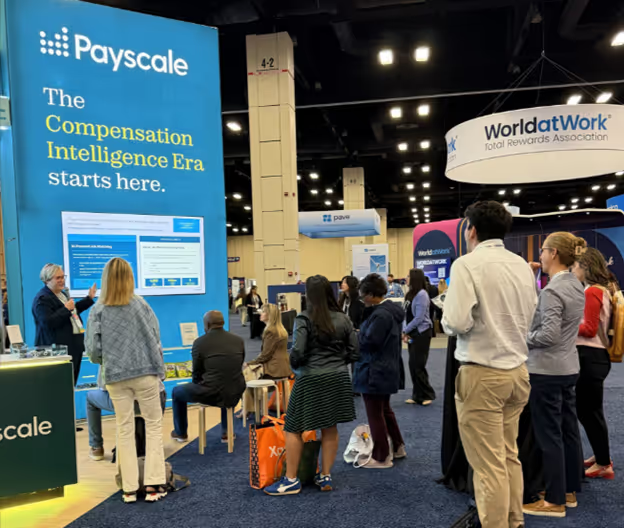
The fragmented technology problem has a solution. Payscale Intelligence Cloud represents a fundamentally different approach to compensation management: not a collection of disconnected tools, but a unified system that puts the right data in front of the right person at the right moment across every stage of the employee lifecycle.
Where traditional compensation tools are built around the compensation analyst, Payscale Intelligence Cloud is built around pay decisions holistically. Whether a recruiter is posting a job ad, a manager is preparing for a pay conversation, a comp analyst is running a market review, or a CHRO is designing a workforce strategy, intelligence is what each stakeholder needs, in the context they need it.
Payscale Intelligence Cloud combines HRIS salary data, labor demand signals, pay premiums for hot skills, and more into a single foundation. When HR, finance, and talent acquisition are drawing from the same source, the conversation shifts from "which number is right?" to "what should we do about it?"
This is what compensation intelligence makes possible: pay decisions that are faster, more defensible, and more human, because the people making them have what they need to explain not just the number, but the story behind it.
"Transparency without explanation isn't a feature — it's a liability. The employee doesn't need to see the data. They need to understand the story the data is telling." - Daniel Mealo, Manager of Compensation Data at Orlando Health
The bottom line from TR'26
World at Work Total Rewards '26 sent compensation professionals home with a lot to think about: AI adoption roadmaps, pay transparency timelines, pay-for-performance debates, and certification pathways they didn't have last year.
But underneath all of it was a single, unifying signal: the era of compensation as a back-office function is ending. The era of compensation intelligence is here.
The organizations that will win on talent in the next five years aren't the ones with the most sophisticated formulas. They're the ones where every stakeholder — HR, finance, talent acquisition, people managers, and employees — works from a shared understanding of what pay means, why it's structured the way it is, and how it connects to the larger story of what the organization values.
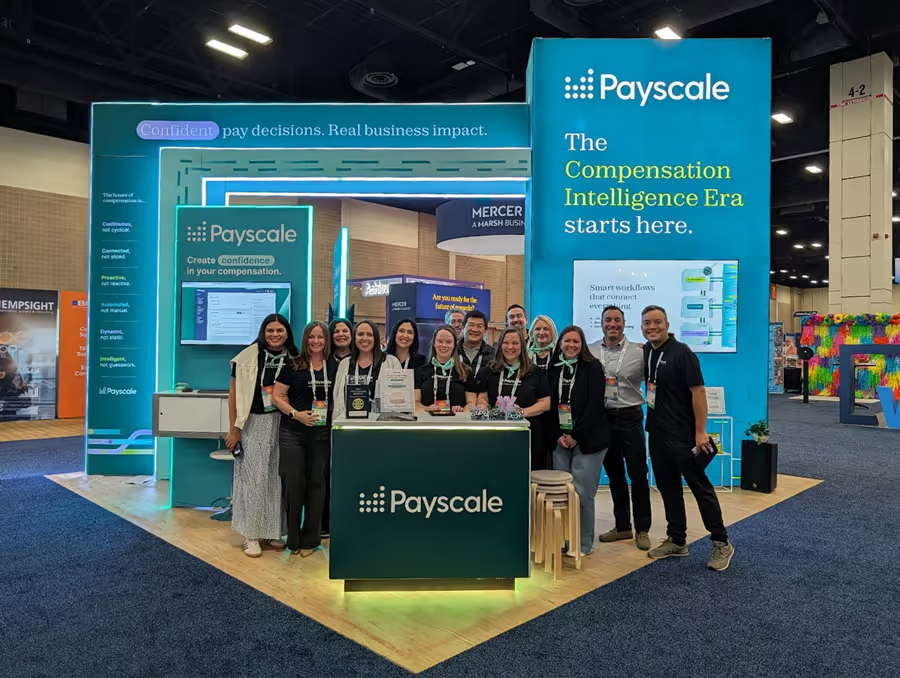
Payscale was a proud sponsor and presenter at World at Work Total Rewards '26. Want to learn how Payscale Intelligence Cloud helps HR, finance, and people managers work from the same compensation foundation? Chat with an expert today.
Ruth Thomas is joined by Lexi Clarke on the Expo Hall of World at Work Total Rewards 2026 in a live Comp & Coffee podcast.